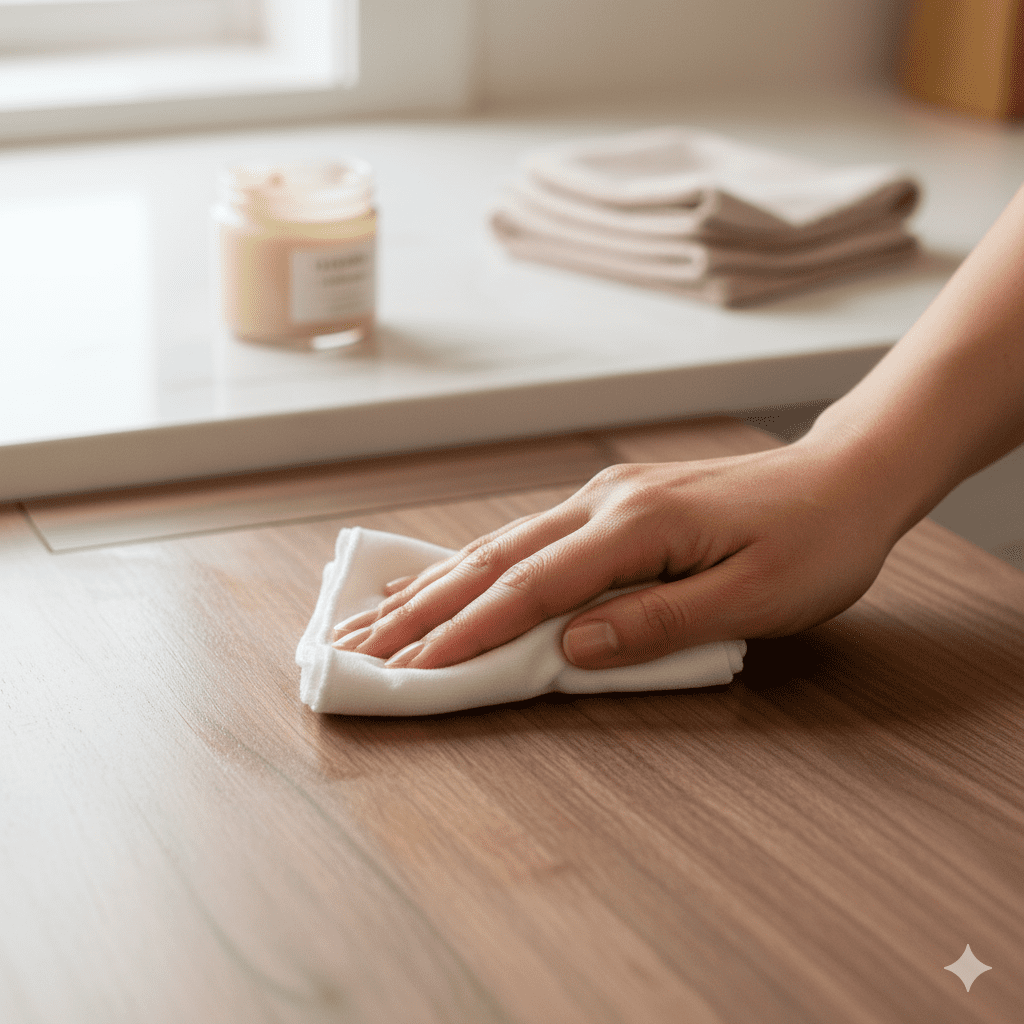
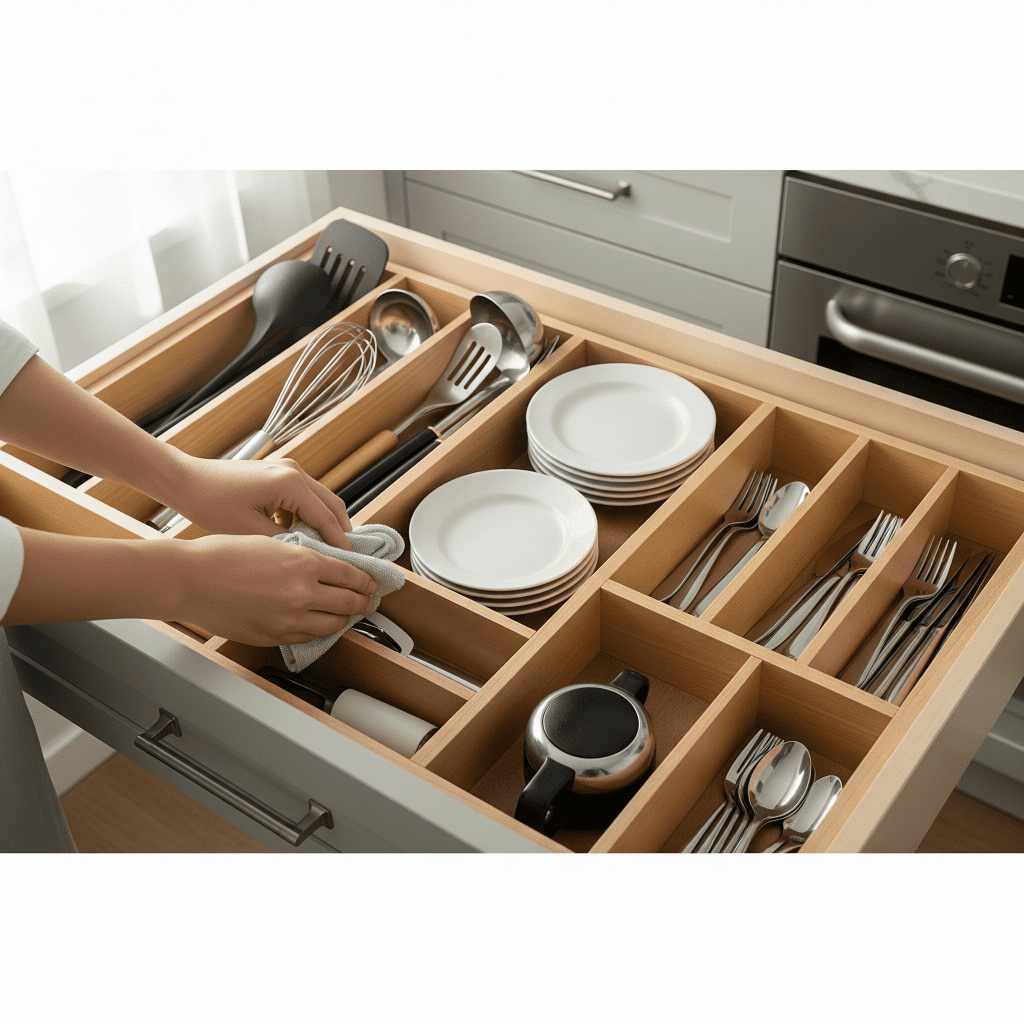
A soft cotton cloth dampened with warm water is usually sufficient to clean your cabinets. If more thorough cleaning is required, please use a fresh solution of mild hand dishwashing liquid mixed with warm water. After cleaning, wipe all surfaces with a clean, damp cloth. Dry immediately using another soft, clean cloth.
The following products are to be avoided, as damage may occur:
Clean spills and splatters immediately. Prolonged exposure to spills, including food, water or other liquids, or to oil and grease splatters, can cause permanent discolouration or damage to your cabinet’s finish
Use a clean, soft lint-free cotton cloth for regular dusting.
Packaged dusting sheets are not required or recommended. Do not use pre-moistened dusting sheets, and do not use aerosol products made for dusting.
Waxing is not required or recommended. Over time, waxing and polishing compounds may build up on the surface of your cabinets and cause a hazy, streaky or yellowed appearance. This wax build-up is very difficult to remove.
Extra care is required when cleaning glass doors. Spray an ammonia-free glass cleaner on a clean, soft, lint-free cloth or paper towel. Do not spray cleaner directly on the glass. It could seep behind the window dividers and cause damage.
Avoid draping damp clothes or dishtowels over cabinet doors. This moisture can cause permanent damage — such as peeling and discolouration — to the cabinet’s finish.
Exposure to direct sunlight tends to darken the colour of natural wood products. Sunlight can also fade painted wood surfaces, laminated surfaces and thermofoil surfaces. You should consider draperies or blinds to shield your cabinets from direct sunlight.
The heat generated when using an oven’s self-cleaning feature is much greater than during normal cooking. If this heat escapes from the oven, it can damage your cabinets. While this is a rare circumstance, you can minimize the risk of cabinet damage by removing cabinet doors and drawers nearest the oven before using its self-cleaning feature.